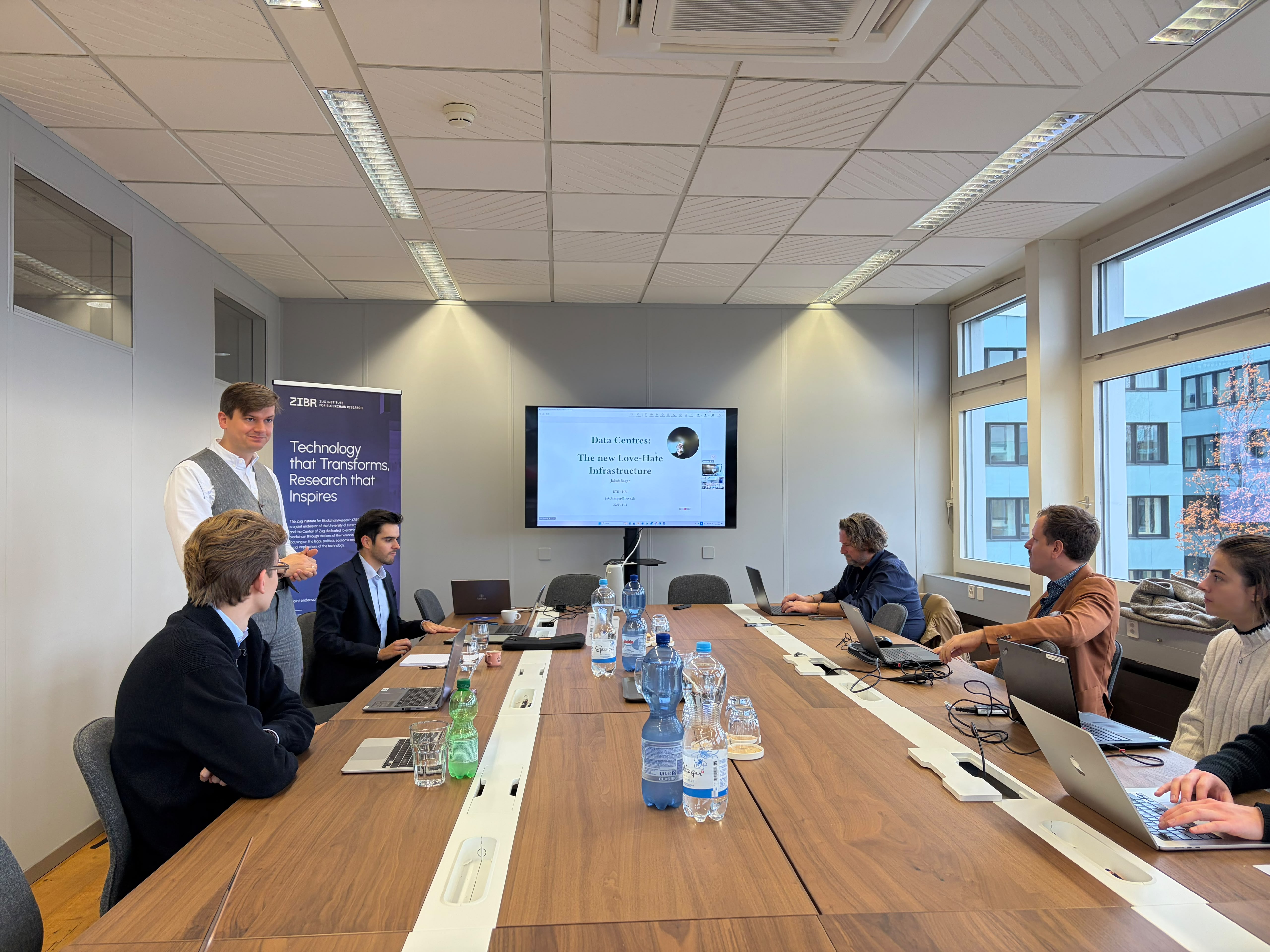
The Zug Institute for Blockchain Research (ZIBR) recently held a lunch roundtable on client protection in connection with cryptocurrencies. Cryptocurrencies were originally conceived as a means of payment but are now used mainly as investments. Holding them exposes clients, and retail clients inparticular, to a wide range of risks such as high volatility, security incidents, the insolvency of service providers, and market abuse. Two distinguished speakers from legal practice examined how Swiss law currently deals with these risks and where it is heading.
Dr. Stefan Härtner, Senior Legal & Policy Specialist at theFINMA Fintech Desk, opened with the supervisor's perspective. He set out what the current legal framework already covers. For instance, counterparty risks are addressed through the segregation of crypto assets in the custodian's bankruptcy. Operational risks are addressed through licensing requirements and supervision. To combat fraud, FINMA provides investor guidance, publishes a warning list and runs a reporting platform. He also noted that existing law addresses the heterogeneous risk landscape only in part.
Dr. Fabrice Eckert (Homburger) then looked at the ongoing revision of the Financial Institutions Act (FinIA), which introduces stablecoins and also strengthens client protection. He focused on topics such as indirect counterparty risks and on risks at the point of sale, using so-called "airdrops" to illustrate the practical and technological questions involved in implementation.